How the Columbus property context affects the scope
System selection is checked against deck capacity, insulation needs, rooftop equipment, ponding patterns, wind exposure, repairability, and warranty requirements.

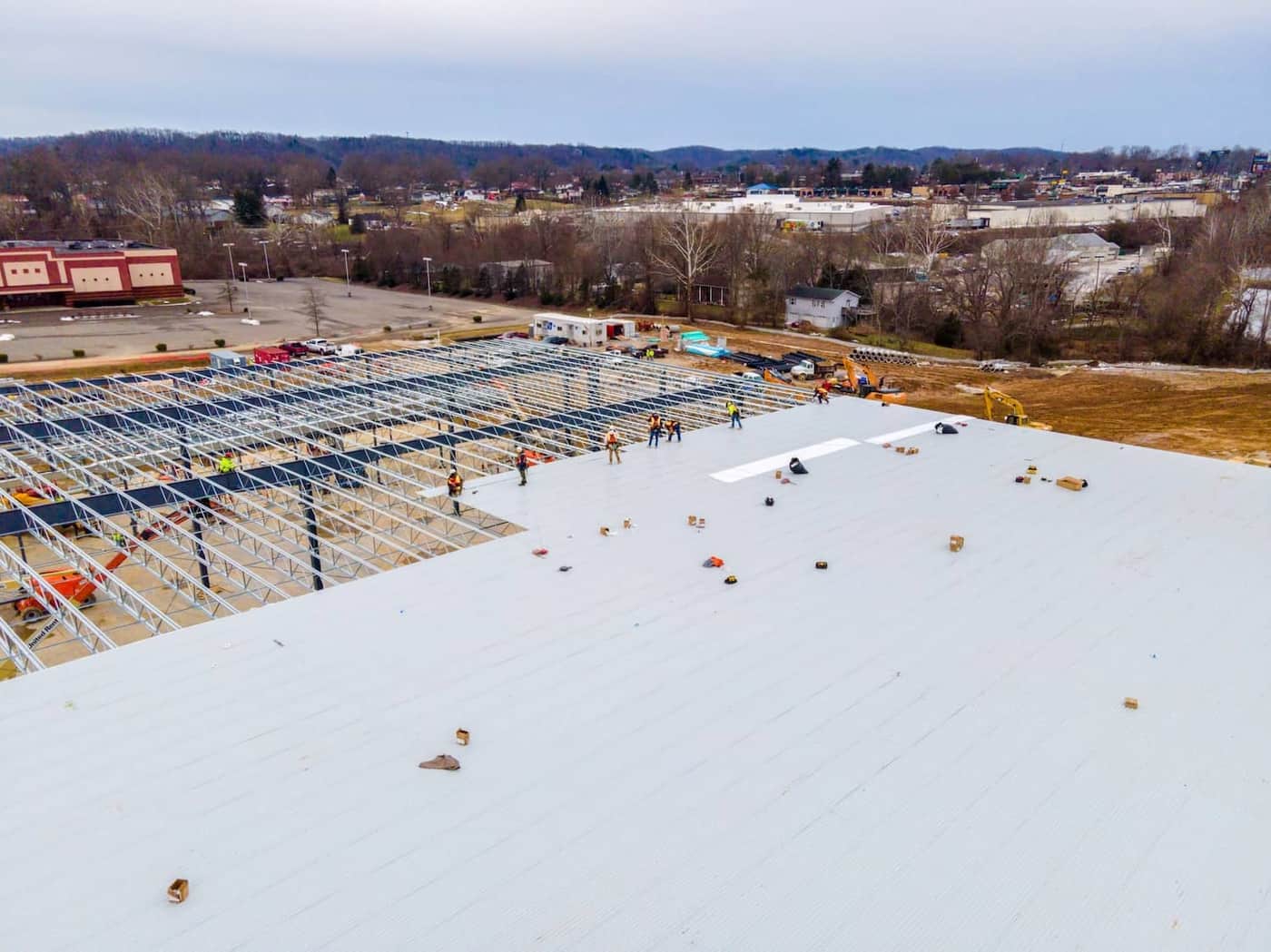
Roof System for Columbus commercial properties
Thermoplastic polyolefin is the dominant flat-roof membrane in the Columbus market. It handles central Ohio's 28 freeze-thaw cycles with flexibility other single-ply systems lack, its heat-welded seams are pull-test verifiable, and manufacturer NDL warranty terms run to 30 years on qualifying installations. We install TPO in every configuration, mechanically attached, fully adhered, and ballasted, across Franklin, Delaware, Licking, and Union Counties.
TPO took over the Columbus commercial roofing market for practical reasons. The seam is the weakest point of any single-ply membrane, and TPO's heat-welded seam eliminates the adhesive bond that EPDM tape relies on, a properly welded TPO seam is stronger than the surrounding membrane. In a freeze-thaw environment like central Ohio's, that matters. The membrane cycles through temperature swings from below zero in January to 150-degree surface temperatures in July, and the seam has to survive every one of those cycles.
System selection is checked against deck capacity, insulation needs, rooftop equipment, ponding patterns, wind exposure, repairability, and warranty requirements.
Owners receive a system-level recommendation that explains what can stay, what should be removed, where risk remains, and how the selected assembly should be maintained.
Questions
60-mil is the minimum we install on Columbus commercial roofs, it is the minimum thickness qualifying for most manufacturer NDL warranties. For roofs with regular foot traffic, HVAC service routes, or rooftop terraces, we specify 80-mil. On exposed buildings on the north and northwest edges of the metro where wind loading is above the median, 80-mil fully adhered is our standard recommendation. 45-mil TPO exists but the cost difference from 60-mil does not justify the reduced puncture resistance and reduced warranty eligibility.
Mechanically attached TPO can be installed with ambient temperatures at or above 40°F and no precipitation, conditions achievable on a significant number of days from November through March in Columbus. Heat-welding quality degrades in cold and wet conditions, so we monitor forecast windows carefully. Fully adhered systems require adhesive temperatures above 40°F and may need supplemental heat tenting in January and February. We do not skip winter projects; we qualify the weather window before mobilizing.
Both systems perform well in the Columbus freeze-thaw climate. TPO's heat-welded seams are mechanically verifiable and its reflective surface reduces cooling load measurably on Columbus buildings running HVAC through the summer. EPDM has 40 years of installation history in the Columbus market and a larger base of certified repair contractors. We recommend TPO for new construction and full replacements where seam verifiability and energy performance are priorities. We recommend EPDM when a recover is feasible and the existing system is EPDM, avoiding tear-off cost when the assembly is sound is the right capital decision.
Share the building address, roof history, current concern, timing, and access constraints. We will give you a practical next step for inspection, repair, maintenance, coating, or replacement planning.
Contact Commercial Roofers of Columbus