How the Columbus property context affects the scope
System selection is checked against deck capacity, insulation needs, rooftop equipment, ponding patterns, wind exposure, repairability, and warranty requirements.

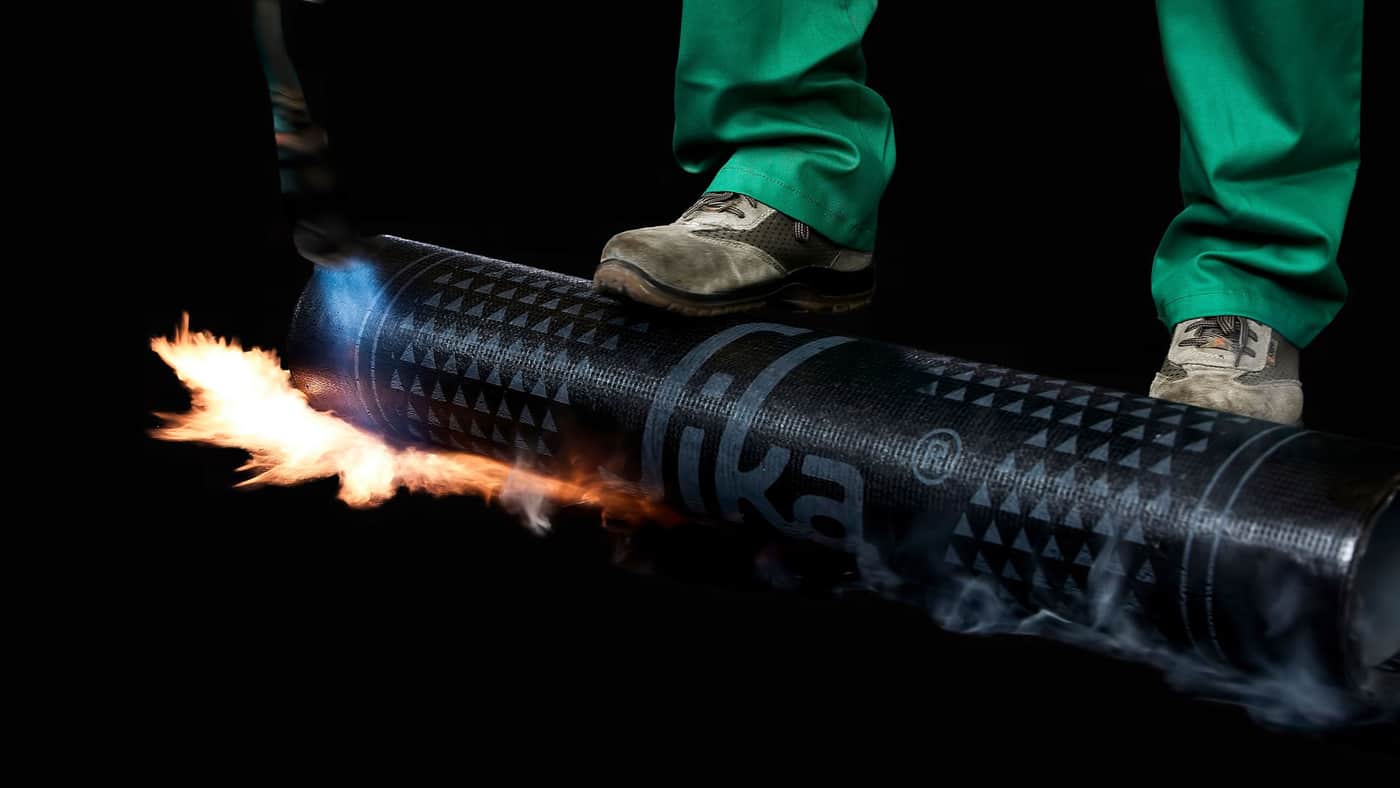
Roof System for Columbus commercial properties
Modified bitumen remains the right membrane for Columbus commercial roofs that face regular foot traffic, require field repairability without specialist tools, or carry rooftop equipment on low-slope decks. APP and SBS formulations handle central Ohio's freeze-thaw cycling and are available in torch-applied and cold-applied configurations to match building use and fire code requirements.
Modified bitumen is a hybrid system, asphalt modified with polymers (APP or SBS) applied in granule-surfaced sheets. It is heavier than single-ply membranes, but that weight is part of its value proposition on roofs where foot traffic, tool drops, and equipment service activity would puncture or abrade a thinner membrane. Columbus commercial buildings with high-density HVAC equipment, frequent mechanical contractor access, or rooftop garden elements routinely specify mod-bit.
System selection is checked against deck capacity, insulation needs, rooftop equipment, ponding patterns, wind exposure, repairability, and warranty requirements.
Owners receive a system-level recommendation that explains what can stay, what should be removed, where risk remains, and how the selected assembly should be maintained.
Questions
A properly installed two-ply SBS system in Columbus typically achieves 15 to 20 years of service life before the cap sheet granule loss and seam degradation warrant replacement. The systems that fail early, in 8 to 12 years, are usually single-ply mod-bit installations (one cap sheet, no base sheet) or systems where torch application was rushed and adhesion to the substrate is incomplete. Two-ply with a base sheet and a granule-surfaced cap sheet is the minimum standard we install for Columbus commercial buildings.
A mod-bit recover over existing BUR is viable when the existing BUR is structurally sound and the deck has load capacity for the added membrane weight. We evaluate this with core samples and deck load calculations. Many Columbus industrial buildings from the 1970s with original BUR are candidates for a mod-bit recover if the insulation is dry and the aggregate surface is properly prepared. If the BUR has multiple flood-coat layers or the deck load is marginal, full tear-off is the right recommendation.
It depends on the fire marshal's interpretation and the specific building conditions. Torch application in general requires a hot-work permit from the Columbus Division of Fire and coordination with the building's fire suppression system. On buildings with active occupancy directly below the work zone or with combustible materials in adjacent areas, cold-applied or heat-welded seam systems are the alternative. We evaluate permit requirements before proposing a torch-applied specification on any occupied Columbus building.
Share the building address, roof history, current concern, timing, and access constraints. We will give you a practical next step for inspection, repair, maintenance, coating, or replacement planning.
Contact Commercial Roofers of Columbus