How the Columbus property context affects the scope
System selection is checked against deck capacity, insulation needs, rooftop equipment, ponding patterns, wind exposure, repairability, and warranty requirements.

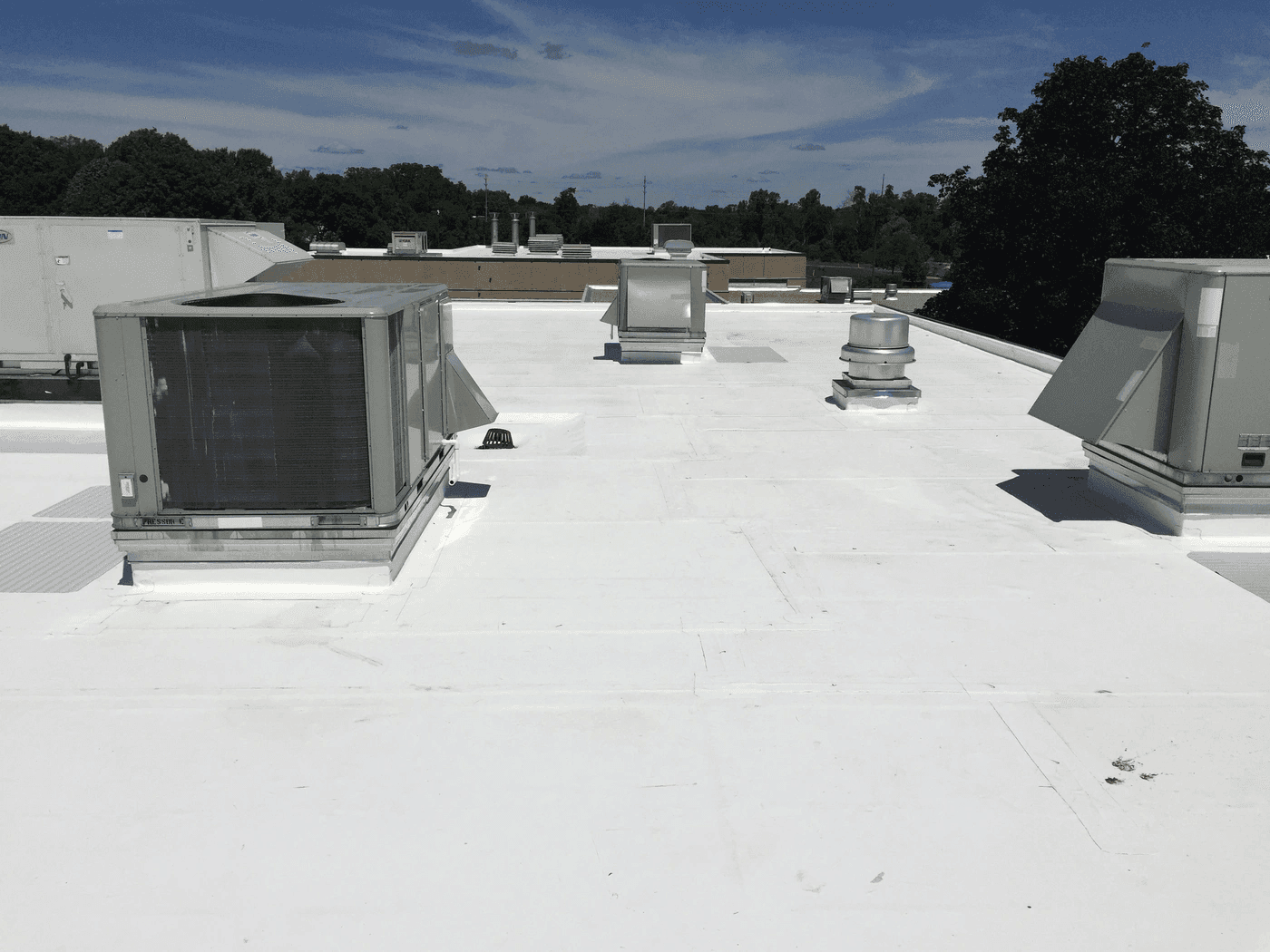
Roof System for Columbus commercial properties
PVC roofing is the correct answer for Columbus commercial buildings where grease exhaust, chemical exposure, or standing-water resistance is a requirement. Heat-welded seams, genuine chemical resistance, and biologics resistance make PVC the appropriate membrane for restaurant chains, food distribution, and industrial process buildings across the Columbus metro.
PVC is not the highest-volume membrane in the Columbus market, TPO holds that position, but it is the right membrane for specific building conditions, and those conditions occur frequently enough in Columbus's commercial real estate base that a significant share of our installations call for it.
System selection is checked against deck capacity, insulation needs, rooftop equipment, ponding patterns, wind exposure, repairability, and warranty requirements.
Owners receive a system-level recommendation that explains what can stay, what should be removed, where risk remains, and how the selected assembly should be maintained.
Questions
It depends on the proximity of cooking exhaust discharge to the membrane and the volume of exhaust. A Columbus restaurant with kitchen exhaust stacks that discharge more than 18 inches above the membrane surface and are oriented away from prevailing roof wind may be adequately served by TPO. A restaurant where exhaust discharges at or near membrane level, as is common in strip mall buildings where the exhaust fan sits directly on the roof deck, should use PVC in the affected zone. We evaluate this during the roof assessment and document the recommendation.
Older PVC formulations were prone to plasticizer migration in cold temperatures, the membrane became brittle over time and cracked under thermal cycling. Modern PVC membranes from Sika Sarnafil, Fibertite, and GAF use stabilized formulations that retain flexibility through the Columbus freeze-thaw cycle. A properly installed 50-mil or 60-mil modern PVC system in Columbus routinely achieves 20-year service life. The failure mode we see on older PVC roofs from the 1990s is plasticizer loss, an issue that does not affect membrane products manufactured after approximately 2005.
PVC typically runs 10 to 20 percent higher in installed cost compared to equivalent TPO. The premium is justified when chemical resistance or long-duration ponding resistance is a requirement, a TPO membrane that degrades at a grease exhaust point in five years costs more to repair and replace than the premium paid for PVC at installation. When chemical exposure is not a factor, we recommend TPO on cost grounds. When it is, the PVC premium is the correct capital decision.
Share the building address, roof history, current concern, timing, and access constraints. We will give you a practical next step for inspection, repair, maintenance, coating, or replacement planning.
Contact Commercial Roofers of Columbus