How the Columbus property context affects the scope
The building type affects staging, work hours, tenant protection, rooftop equipment coordination, drainage review, access routes, and closeout documentation.

Property Type for Columbus commercial properties
Retail roofs are deceptively complex. From the outside a shopping center looks like one building, but the roof above it is almost never one roof, it's a patchwork of sections built and modified at different times, carrying the rooftop equipment of a dozen or more separate tenants, all draining toward shared points and all expected to stay dry over merchandise, customers, and staff who never see what's happening overhead. Whether it's a regional center like Easton Town Center or Polaris Fashion Place, an enclosed mall such as Tuttle Crossing, a lifestyle center like Lennox Town Center, or a suburban strip center or big-box store, the defining challenge is the same: many tenants, many penetrations, and one continuous water-management problem.
Columbus retail also carries a real climate burden. Central Ohio sits in ASHRAE/IECC climate zone 5A, cold and humid, with roughly 65 to 70 freeze-thaw cycles a year, meaningful snow and ice-dam loads in winter, and humid summers that bake low-slope membranes under full sun. Add the eastern fringe of the Midwest hail belt, where spring and summer storms occasionally drop 1-inch-plus hail, and a retail roof has to handle thermal cycling, ponding, impact, and heavy rooftop equipment loads all at once. The stores beneath it, meanwhile, can't close for the roof's convenience. Protecting retail operating hours is as much a part of the job as the membrane itself.
The building type affects staging, work hours, tenant protection, rooftop equipment coordination, drainage review, access routes, and closeout documentation.
The result is a property-specific roof plan that protects the building use while giving ownership a clear scope, schedule, access plan, and budget path.
Questions
We trace the water path, not just the drip. By mapping the roof against the tenant footprint and using infrared or moisture surveys to find saturated insulation, we identify the actual entry point, which is often over a different lease space than where the stain appears. That tells you which tenant's equipment or section caused the leak and where the repair responsibility belongs.
Yes, and that's the standard expectation for retail. We phase the work, schedule disruptive operations for nights and after-hours, protect the interior and storefronts, and keep every work zone weather-tight at the end of each shift. Materials are staged where they won't block entrances or fire lanes during business hours.
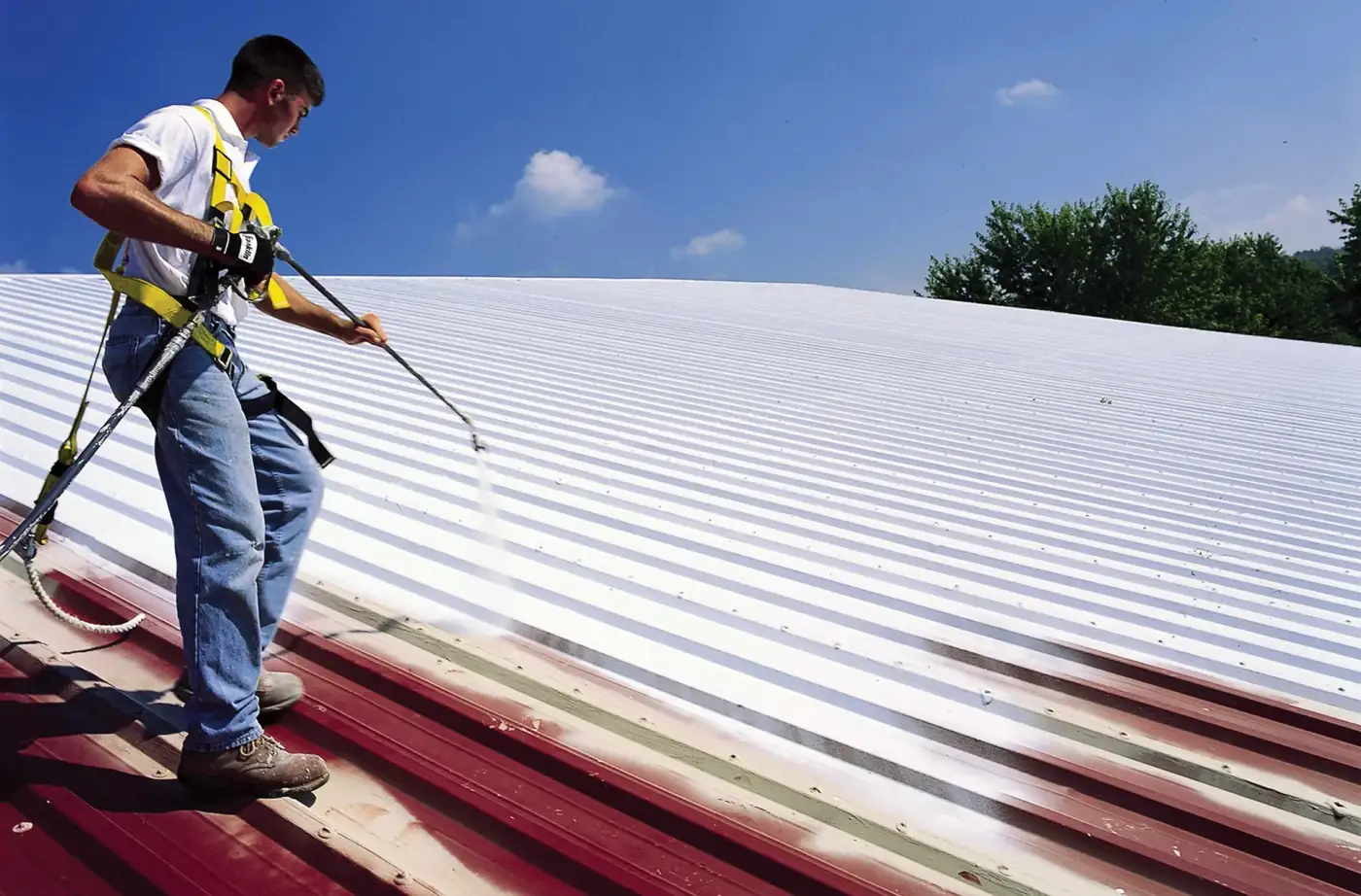
Usually, yes. A white reflective TPO or PVC membrane bounces solar heat off thousands of square feet of low-slope roof, which trims cooling load and HVAC wear through central Ohio's humid summers. Paired with an insulation upgrade toward or above the regional R-25 baseline during a re-roof, the energy savings can be significant across the whole building.
Share the building address, roof history, current concern, timing, and access constraints. We will give you a practical next step for inspection, repair, maintenance, coating, or replacement planning.
Contact Commercial Roofers of Columbus