
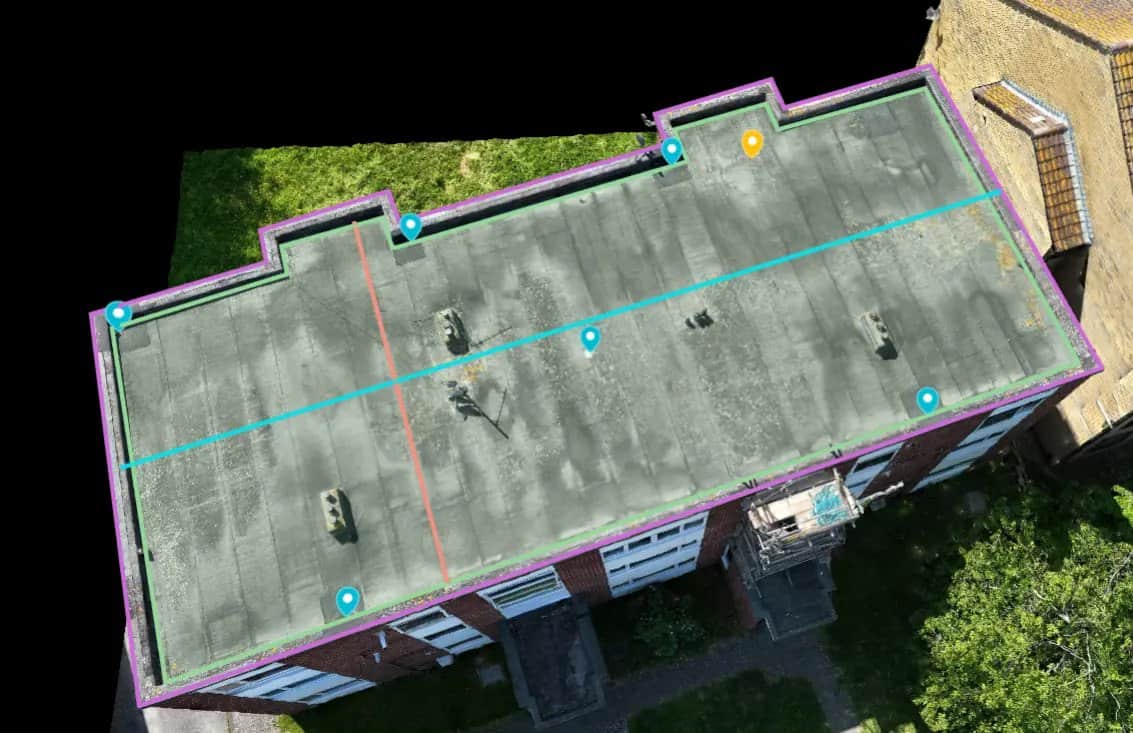
Roof Asset Management decision points
The foundation is an initial baseline inspection. Before we can manage an asset, we need a current condition snapshot: roof zone diagram, membrane system identification, age estimate, warranty status (active, lapsed, or unknown), drain count and condition, and a photograph log of existing anomalies. This baseline becomes the 'year zero' entry in the building's roof maintenance history.
Plan access, interiors, tenants, and daily dry-in
occupied commercial facilities, warehouses, and office buildings do not share the same interruption tolerance. The roof scope should be written around the occupied property as well as the exterior defect. Document roof access, sensitive rooms and inventory, deliveries, public entrances, tenant hours, exhausts and air intakes, interior evidence, and the route used to move tools and debris. These conditions belong in the written scope before scheduling. A dry-in can be appropriate during active weather even when permanent work must wait. The crew's daily record should identify every temporary edge, cover, ballast, drain protection, and remaining exposure before leaving the property.
Separate immediate service from capital work
The recommendation must answer which roofs need service now, which can be restored, which require engineering or design, and which replacements should be sequenced into future capital years. An isolated repair, repair program, restoration, recover assembly, and full replacement solve different condition patterns and should not be presented as interchangeable price levels. Compare the distribution of wet materials, attachment and deck concerns, drainage, detail density, repair frequency, disruption, expected ownership period, energy goals, code assumptions, and warranty requirements. Cost without those differences is not a lifecycle comparison. This prevents an urgent call from becoming an automatic reroof pitch. It also prevents endless patches from consuming money on a roof whose moisture, failures, or lifecycle cost has crossed a reasonable replacement threshold.
The handoff should survive the service call
The practical handoff is a living roof file supported by inspections and service agreements, with repair and replacement handled as separate opportunities. The next person should receive the property address, roof-area identifiers, contacts, access notes, photographs, temporary measures, completed work, open recommendations, and timing. The record should support both field work and management review. Technicians need locations and prior details; ownership needs priorities, open risk, completed spending, next inspection dates, and a defensible future sequence. The result is more than a completed patch or proposal. It is a controlled sequence from immediate response to documented condition, from condition to an appropriate option, and from that option to scheduled stewardship of the roof asset.
Collect the details that shape safe dispatch
A useful intake for Local Roofers identifies who can grant access, where water is entering, what operations are affected, whether electrical or ceiling hazards exist, how the symptom changes with weather, and which roof records or photographs are available. Interior photographs can preserve stain limits and active-drip locations before ceiling materials are moved. Roof photographs from facility staff may help with orientation, but they do not replace safe field verification or authorize untrained personnel to enter the roof. The response plan should match the reported condition without promising a cause, permanent repair, or arrival time that has not been verified. Dispatch clarity is valuable precisely because it avoids unsupported assumptions.
Define scope and pricing boundaries
The owner should see the boundary between the base scope and contingent work. That includes moisture limits, substrate repair, additional layers, damaged deck, blocked piping, inaccessible details, hazardous materials, and work by other trades. Exclusions should not function as an escape hatch. Each exclusion needs a reason and, where practical, a defined way to resolve it through testing, access, document review, engineering, or a unit-price condition discovered during construction. Closeout requirements should be priced as part of the work: final photographs, repair locations, warranty or material records, open punch items, and the next recommended inspection. Those documents keep the completed scope connected to the roof plan.
Why local exposure changes the field plan
Columbus, OH roofs work through heavy thunderstorms, freeze-thaw cycling, snow, wind, and leaf debris that can restrict drainage. That exposure guides the field sequence, but it does not by itself explain one building or a portfolio where roof ages, leak history, repair spending, condition, warranties, maintenance, and replacement timing need to live in one decision record. Start with the room, ceiling grid, equipment, wall line, and time of entry, then carry those coordinates to the roof. Comparing high and low points, rooftop details, prior patches, and flow paths is more reliable than standing over the first wet-looking surface. This distinction protects the owner from treating a correlation as proof. It also lets the next technician revisit the precise unknown instead of repeating the entire investigation.
Document the condition before choosing the scope
For Local Roofers, the field file should capture property and roof identifiers, area and system, installation year, warranty status, inspection dates, leak and repair history, condition grade, immediate needs, budget ranges, target year, and next inspection date. Each note needs a roof-area reference so a photograph or recommendation can be found again after the visit. The practical method is to inventory each roof area, establish condition and risk, connect service history to current findings, rank projects, and refresh the plan as repairs and inspections change the evidence. Where destructive or electronic testing is proposed, the scope should identify its purpose, limitations, and restoration procedure before work begins. Observed facts, recommended actions, completed work, and open items should never share one unlabeled list. Separating them lets an off-site approver see exactly what was authorized and what still needs a decision.
Treat each roof assembly on its own terms
Roof-system identification changes the diagnosis. Around Columbus, the target page inventory includes single-ply membrane, coated roof areas, and metal roof areas, each with its own seam, flashing, fastener, and compatibility questions. The scope should name the membrane or surface that was actually observed, identify unknown construction, and check compatibility before mastics, primers, membranes, or coatings are specified. Core information may be necessary when layers and attachment affect the option set. A localized defect may be repairable while saturated insulation or chronic ponding changes the wider recommendation. That is why roof construction and moisture evidence must be connected to which roofs need service now, which can be restored, which require engineering or design, and which replacements should be sequenced into future capital years.
Columbus decision checklist
- Map the interior symptom to a named roof area before selecting a repair detail.
- Record temporary measures separately from permanent work and list every open item.
- Verify drainage, penetrations, walls, edges, earlier repairs, and transitions around the affected area.
- State the observed roof assembly, unknown construction, access limits, and testing assumptions.
- Connect the recommendation to repair, restoration, replacement, maintenance, or capital-planning thresholds.
- Set the next inspection or follow-up date so the roof history continues after this visit.
Commercial roof decision questions
Does this condition automatically mean the roof must be replaced?
No. The review should establish which roofs need service now, which can be restored, which require engineering or design, and which replacements should be sequenced into future capital years. Replacement becomes a defensible recommendation only when the field evidence, moisture, assembly condition, repair history, deck or attachment concerns, and lifecycle comparison support it.
What should the Columbus roof scope document?
It should document property and roof identifiers, area and system, installation year, warranty status, inspection dates, leak and repair history, condition grade, immediate needs, budget ranges, target year, and next inspection date. It should also label temporary and permanent work separately, state assumptions and exclusions, and identify the inspection or service step that follows the current scope.
How does an urgent call become a maintenance or capital plan?
The immediate visit creates the first roof-area record. A follow-up inspection establishes condition and priorities. Completed repairs, recurring observations, drain service, warranties, and future recommendations are then retained so maintenance stays scheduled and larger work can be placed into the appropriate capital year.
From service call to roof plan
Use the next decision, not the biggest sale.
Stabilize the problem, document the roof, compare the viable paths, and keep the resulting roof history active.