How the Columbus property context affects the scope
The building type affects staging, work hours, tenant protection, rooftop equipment coordination, drainage review, access routes, and closeout documentation.

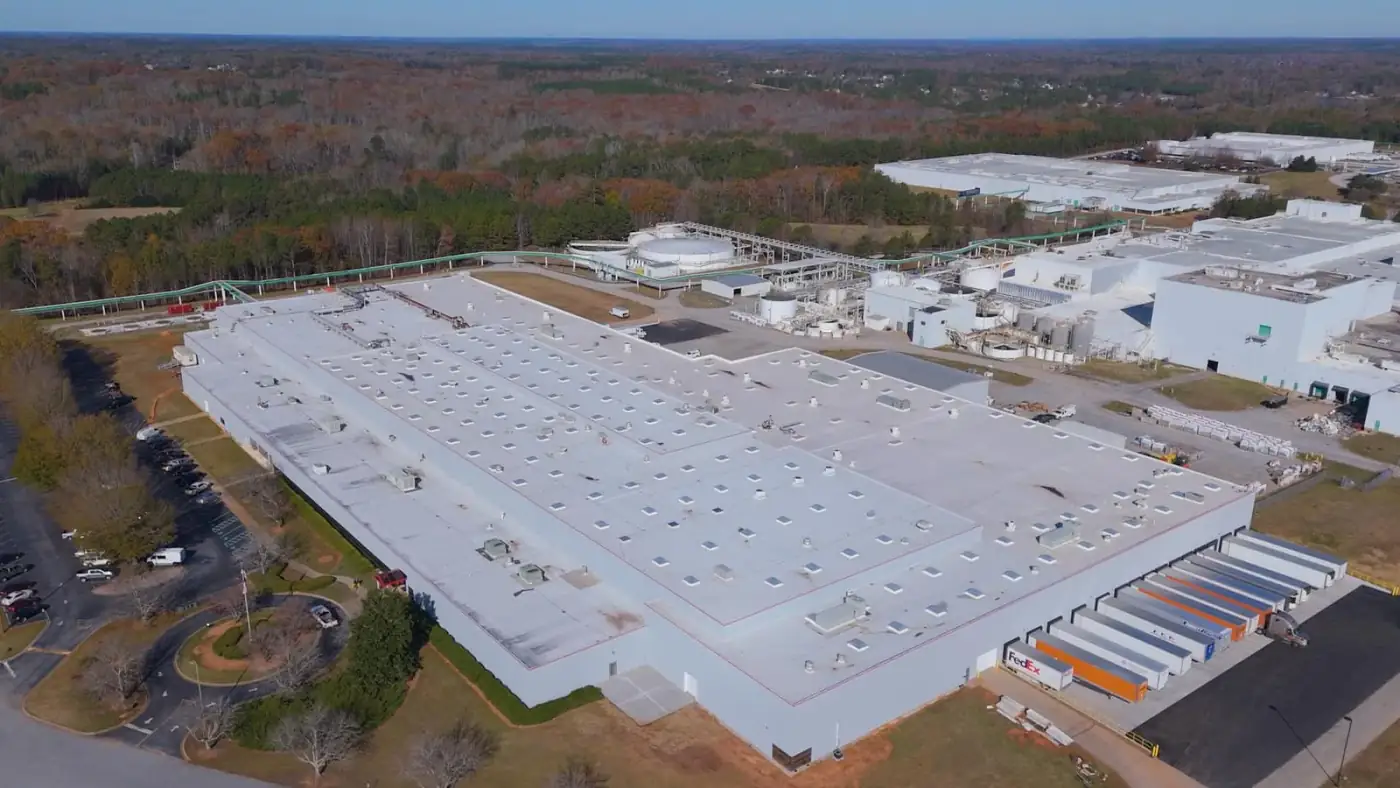
Property Type for Columbus commercial properties
Central Ohio has become one of the most important logistics hubs in the country, and the roofs over its distribution centers are among the largest single membrane fields a commercial roofer will ever install or maintain. A modern distribution center is a multi-acre low-slope roof over a 24-hour freight operation, and almost every challenge it presents is a function of that scale and that schedule. The region's logistics gravity centers on the Rickenbacker International inland port and cargo complex south of the city, the explosively growing Licking County and Etna Township logistics parks to the east, and the warehouse corridors that line I-70, I-71, and I-270. Amazon fulfillment, Intel-adjacent suppliers, and third-party logistics operators all run buildings where production never stops and the roof has to be sequenced around the freight.
What makes distribution-center roofing distinct is not complexity per detail but the consequences of scale. When a roof covers many acres, drainage sizing, ponding, and wind behavior at tall parapets all become engineering problems rather than rules of thumb. The economics of mechanically-attached TPO versus other systems matter at hundreds of thousands of square feet. Reflective cool-roof savings compound across an enormous footprint. And in central Ohio's climate zone 5A, with snow-drift loading, roughly 65 to 70 freeze-thaw cycles a year, and occasional hail, designing for the local weather across that much roof is essential. This page covers how we approach these buildings around the clock-driven operations that fill them.
The building type affects staging, work hours, tenant protection, rooftop equipment coordination, drainage review, access routes, and closeout documentation.
The result is a property-specific roof plan that protects the building use while giving ownership a clear scope, schedule, access plan, and budget path.
Questions
For most multi-acre buildings, a mechanically-attached reflective TPO over R-25-or-better polyiso offers the best balance of installation speed, material cost, and energy performance. Where wind exposure or rooftop traffic is severe, we step up to a fully-adhered system or add a cover board for impact resistance.
We design positive slope with tapered polyiso, size primary drains and leaders for the region's design rainfall, and add overflow scuppers or secondary drains. On very large roofs even a small slope deficiency causes big standing-water areas, so slope verification and drainage layout get extra attention, and we design for snowmelt as well as rain.
Height plus the open terrain of suburban logistics parks raises wind-uplift pressures, especially at parapets and corners. We detail coping and edge metal to ANSI/SPRI ES-1, increase perimeter and corner fastening, and verify FM/UL ratings for the building so the roof edge cannot initiate a peel.
Share the building address, roof history, current concern, timing, and access constraints. We will give you a practical next step for inspection, repair, maintenance, coating, or replacement planning.
Contact Commercial Roofers of Columbus