How the Columbus property context affects the scope
The building type affects staging, work hours, tenant protection, rooftop equipment coordination, drainage review, access routes, and closeout documentation.

Property Type for Columbus commercial properties
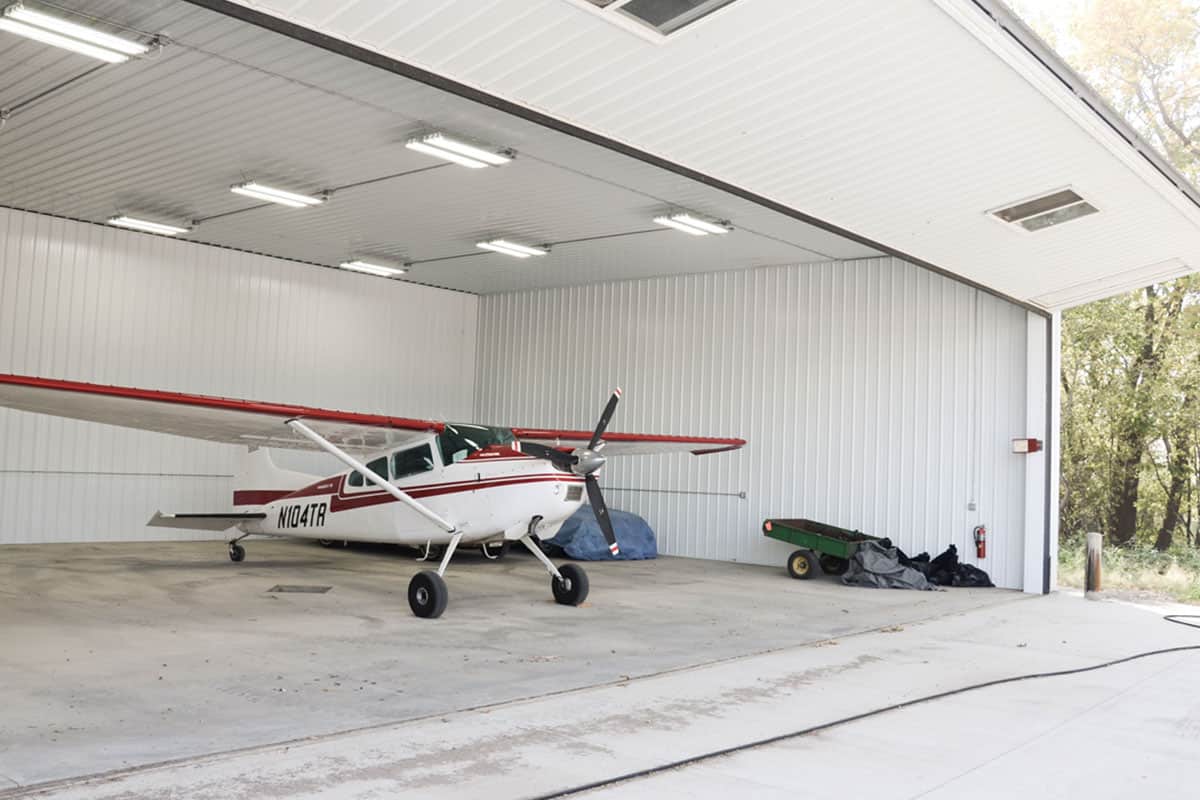
Airport roofs are unlike any other commercial roof in central Ohio. A terminal concourse, a long-span maintenance hangar, and a cargo sort building each behave differently under load, yet they share the same hard constraints: work happens beside an active airfield, the building rarely if ever closes, and even small mistakes carry outsized consequences. Columbus is driven by John Glenn Columbus International Airport (CMH) on the northeast side, with Rickenbacker International Airport (LCK) serving as a cargo and inland-port hub to the south, and general-aviation fields including Bolton Field and The Ohio State University Airport rounding out the region's aviation footprint. Each of these facilities carries low-slope membrane roofs, metal hangar roofs, and a dense population of mechanical penetrations that demand a contractor who understands both roofing science and the airfield environment.
Aviation roofing is a discipline of coordination as much as installation. A reroof over a baggage hall or a concourse with skylights has to be sequenced around 24/7 operations, badged and escorted crews, and strict foreign-object-debris control so that nothing blows toward a taxiway or gets ingested by a turbine. Layer in central Ohio's climate, ASHRAE/IECC climate zone 5A, roughly 65 to 70 freeze-thaw cycles a year, real snow and ice-dam loading, and humid summers, and the case for a precisely detailed, wind-rated, chemically resilient roof becomes obvious. This page explains how we approach terminal, hangar, and cargo roofs across the Columbus market, and the details that separate an airport-grade installation from an ordinary commercial reroof.
The building type affects staging, work hours, tenant protection, rooftop equipment coordination, drainage review, access routes, and closeout documentation.
The result is a property-specific roof plan that protects the building use while giving ownership a clear scope, schedule, access plan, and budget path.
Questions
We treat every piece of material as accountable. Cut-offs are bagged immediately, tools are tethered, edge containment and material magnets are used near movement areas, and the roof plus adjacent ground are swept and inspected at the end of every shift before crews leave. Apron-side work is scheduled with airport operations, and a spotter watches aircraft movements throughout.
Yes. Airport terminals do not close, so we phase the work into zones that can be torn off and made watertight within a single controlled window. Noisy operations are scheduled for low-impact hours, interior finishes are protected, and dust and odor below are managed so travelers and operations continue uninterrupted.
PVC single-ply is usually the strongest choice on apron-adjacent roofs because it resists the glycols, acetates, and exhaust residue those areas see. Paired with an impact-rated cover board and ES-1 edge metal, it handles both the chemical exposure and the high wind that defines an airfield roof.
Share the building address, roof history, current concern, timing, and access constraints. We will give you a practical next step for inspection, repair, maintenance, coating, or replacement planning.
Contact Commercial Roofers of Columbus