How the Columbus property context affects the scope
Damage review starts with the weather event or observed failure, then separates new impact from existing roof condition before the repair scope is set.

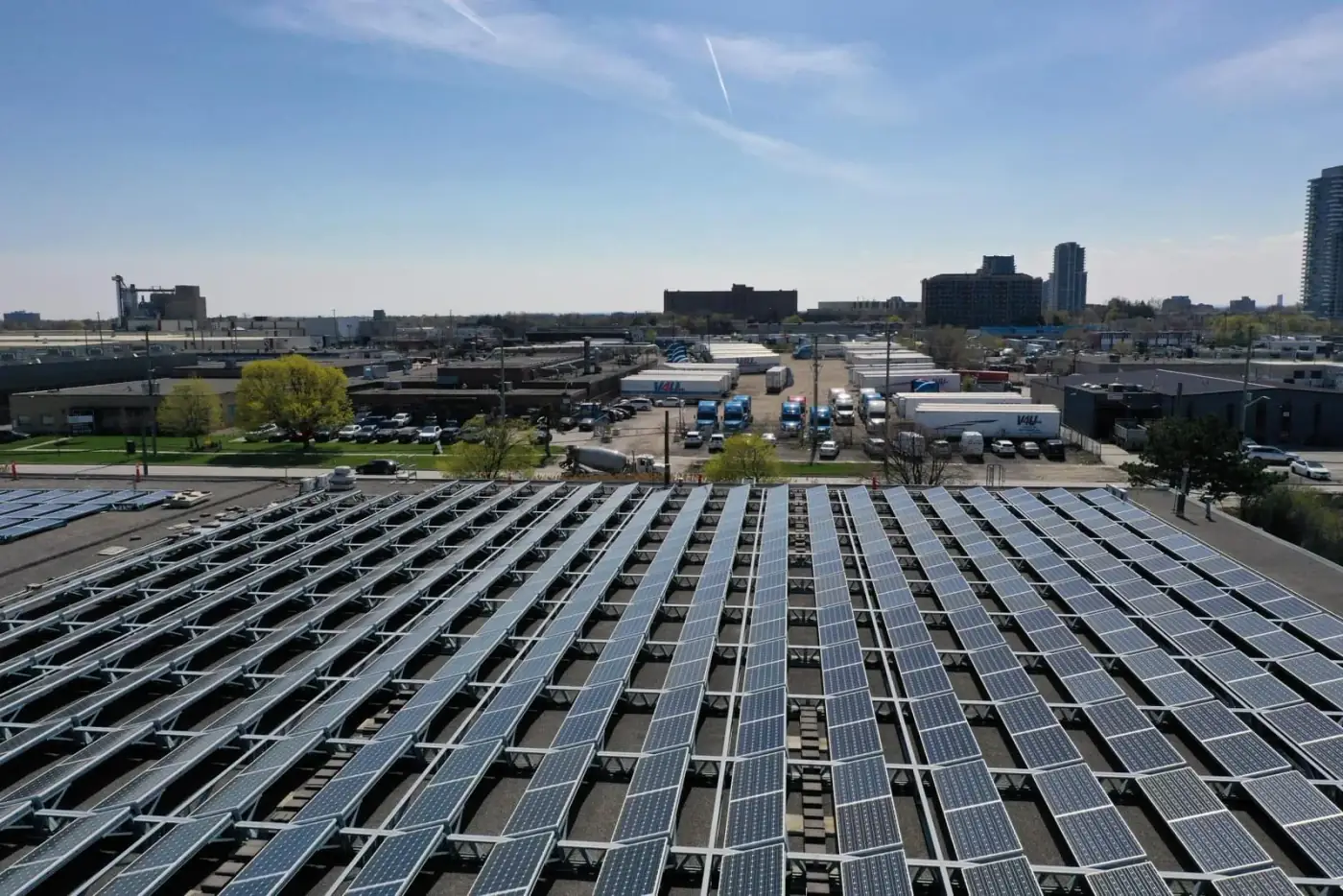
Damage Repair for Columbus commercial properties
Ice dams on commercial flat roofs form differently than on residential sloped roofs. On a commercial flat roof, the dam forms at the drain, meltwater reaches the drain, the drain is partially or fully frozen, and the backed-up water refreezes behind the dam. As the ice mass grows, water backs up further from the drain, reaching areas of the membrane where laps and flashings were not designed to be submerged.
Flashing terminations at parapet walls are the first failure point when ice backs up. A peel-and-stick base flashing properly terminated at 8 inches above the membrane surface will resist backed-up water for some time, but not indefinitely, particularly if the original installation used mastic-only termination that has begun to separate. Once water penetrates behind the wall flashing, it tracks down the interior of the parapet wall and appears inside the building at the ceiling or wall below.
Damage review starts with the weather event or observed failure, then separates new impact from existing roof condition before the repair scope is set.
The outcome is documentation owners can use to decide whether repair, replacement, temporary stabilization, or claim support is the right next move.
Questions
Possibly, but not necessarily. Winter interior leaks on Columbus commercial buildings have three common causes: ice dam backup at drains or parapet walls, condensation from inadequate roof assembly vapor control, and existing membrane damage that was not leaking in fall but fails under winter freeze-thaw stress. We assess all three during a winter damage inspection and identify the actual mechanism before writing a repair scope.
The structural trigger point for most Columbus commercial buildings is approximately 20 to 25 psf of roof load, which corresponds to roughly 8 to 10 inches of dense wet snow or 12 to 15 inches of normal Columbus snow. If you are close to that range and temperatures have remained below freezing for multiple days with no melt, call us for a structural load assessment. We measure the accumulation and estimate the load before recommending removal.
Share the building address, roof history, current concern, timing, and access constraints. We will give you a practical next step for inspection, repair, maintenance, coating, or replacement planning.
Contact Commercial Roofers of Columbus