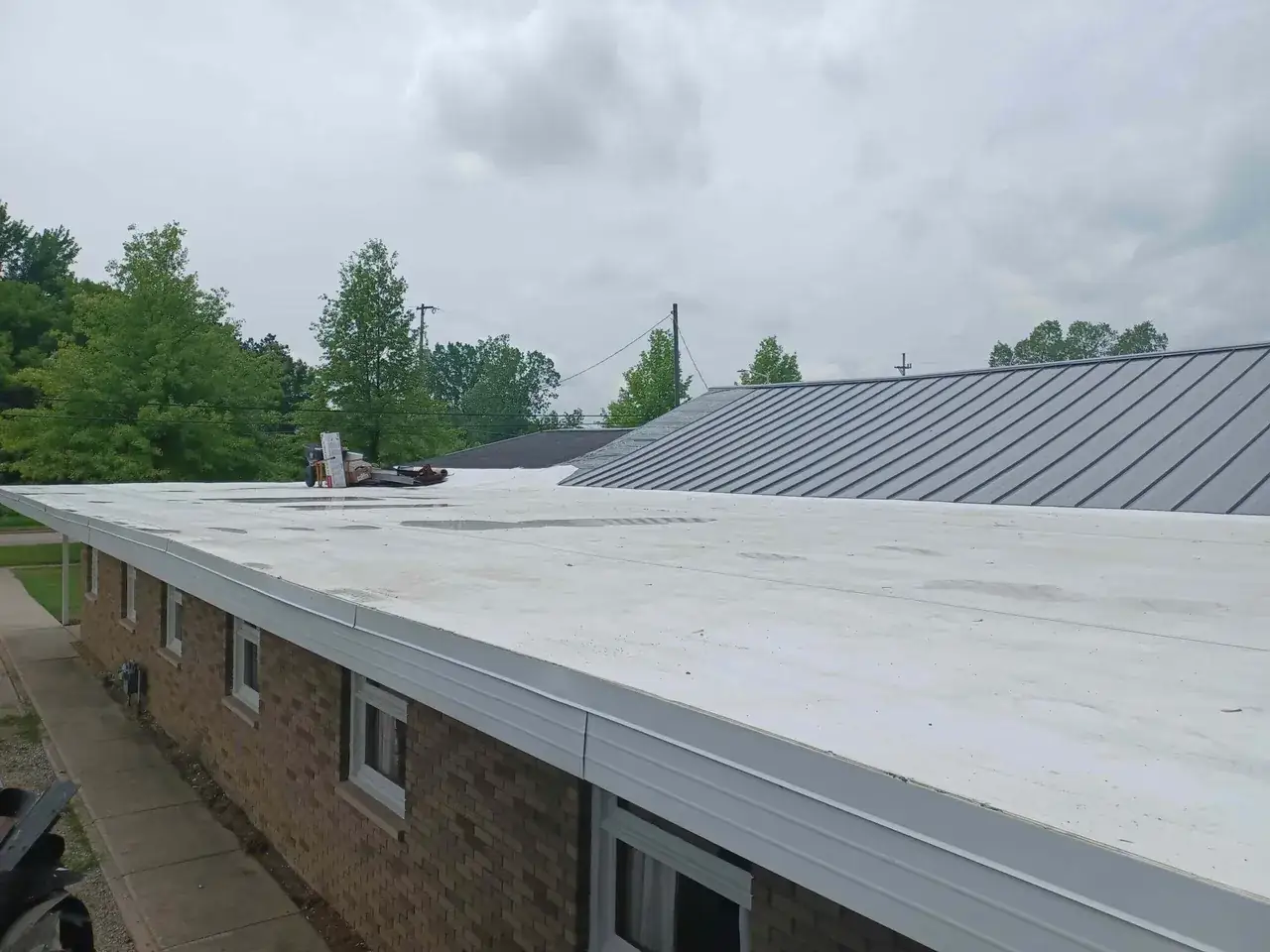
Capability for Columbus commercial properties
The most expensive roofing decision a Franklin County building owner can make is the one that looks cheapest on the day it is signed. A roof is a 20-to-30-year asset, and the number on the install quote is a small fraction of what that roof will actually cost to own across its service life. Energy, maintenance, repairs, the timing of the eventual replacement, and the disruption to operations all accrue long after the crew has left the site. Life-cycle cost analysis, LCCA, sometimes called total cost of ownership, is the owner-advisory discipline that puts all of those costs on one timeline so a building owner can choose the system that costs the least to own, not merely the least to buy.
For Columbus commercial properties this is not an academic exercise. Central Ohio's climate zone 5A loads, roughly 65–70 freeze-thaw cycles a year, real snow and ice-dam exposure, humid summers, and the eastern fringe of the Midwest hail belt, push hard on certain assemblies and reward others. A reflective TPO and a black EPDM roof on the same building have different energy profiles. A restoration coating and a full tear-off have different cash-flow timing. An independent analysis quantifies those differences in dollars so the decision rests on numbers instead of the first-cost reflex.