How the Columbus property context affects the scope
Service decisions are tied to leak history, roof age, membrane condition, drainage, tenant sensitivity, access, and the capital plan behind the property.

Service for Columbus commercial properties
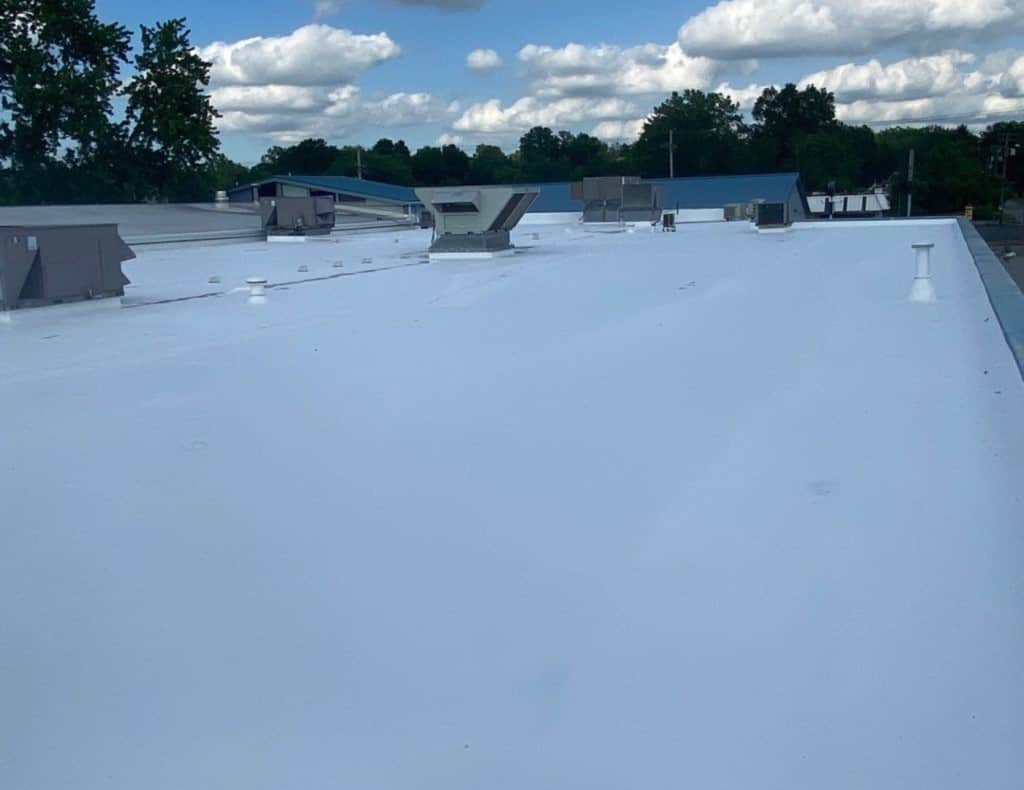
TPO is the default recommendation for new commercial roof installations in Columbus. Its heat-welded seams are verifiable with pull-tests, its white or light-gray surface reflects solar energy measurably in Columbus summers, and its performance in central Ohio's freeze-thaw climate is well-established over 20-plus years of installations in the market. We install 60-mil as the minimum for NDL warranty qualification and 80-mil on roofs with regular foot traffic or elevated wind exposure.
EPDM is the correct choice when an existing EPDM system is being recovered rather than replaced, the new layer is compatible with the existing membrane, and a recover avoids tear-off cost. EPDM is also appropriate when budget pressure is a primary constraint and the reflective-surface advantage of TPO is not a priority. Columbus's substantial inventory of 1980s and 1990s EPDM systems in the suburban office parks in Clintonville, Bexley, and Upper Arlington generates significant EPDM recover and repair work that we address with the same documentation standards as new installation.
Service decisions are tied to leak history, roof age, membrane condition, drainage, tenant sensitivity, access, and the capital plan behind the property.
The next step is a repair scope, replacement budget, coating review, maintenance schedule, bid package, moisture survey, or immediate leak response plan.
Questions
The short answer: schedule a condition assessment. The specific building factors that drive membrane selection are rooftop chemical exposure, existing membrane type, building height and wind exposure, structural load capacity for ballast, and whether the project is a new installation or a recover. We evaluate all of these factors during a documented assessment and provide a written recommendation with rationale. We do not default to one membrane type because we have a large inventory of it, we specify what is correct for the building.
Yes, with sequencing. Mechanically attached TPO generates noise and vibration that is perceptible in the floor below. Fully adhered systems generate less noise but require adhesive odor management in occupied buildings. We work with building management to schedule the noisiest or most odor-intensive phases during off-peak hours or on weekends. For medical buildings in the Ohio State Health and Nationwide Children's networks, we have established protocols for work above occupied clinical areas.
The major manufacturers, Carlisle SynTec, Firestone (Holcim), GAF, Johns Manville, and Sika Sarnafil, all offer 15, 20, and in some cases 25-year NDL warranties for qualifying single-ply installations. The warranty term available depends on membrane thickness, insulation compatibility, drain configuration, and whether the system is mechanically attached or fully adhered. We are approved under each of these manufacturer programs and provide the warranty certificate and full closeout documentation package within 30 days of project completion.
Share the building address, roof history, current concern, timing, and access constraints. We will give you a practical next step for inspection, repair, maintenance, coating, or replacement planning.
Contact Commercial Roofers of Columbus