How the Columbus property context affects the scope
Service decisions are tied to leak history, roof age, membrane condition, drainage, tenant sensitivity, access, and the capital plan behind the property.

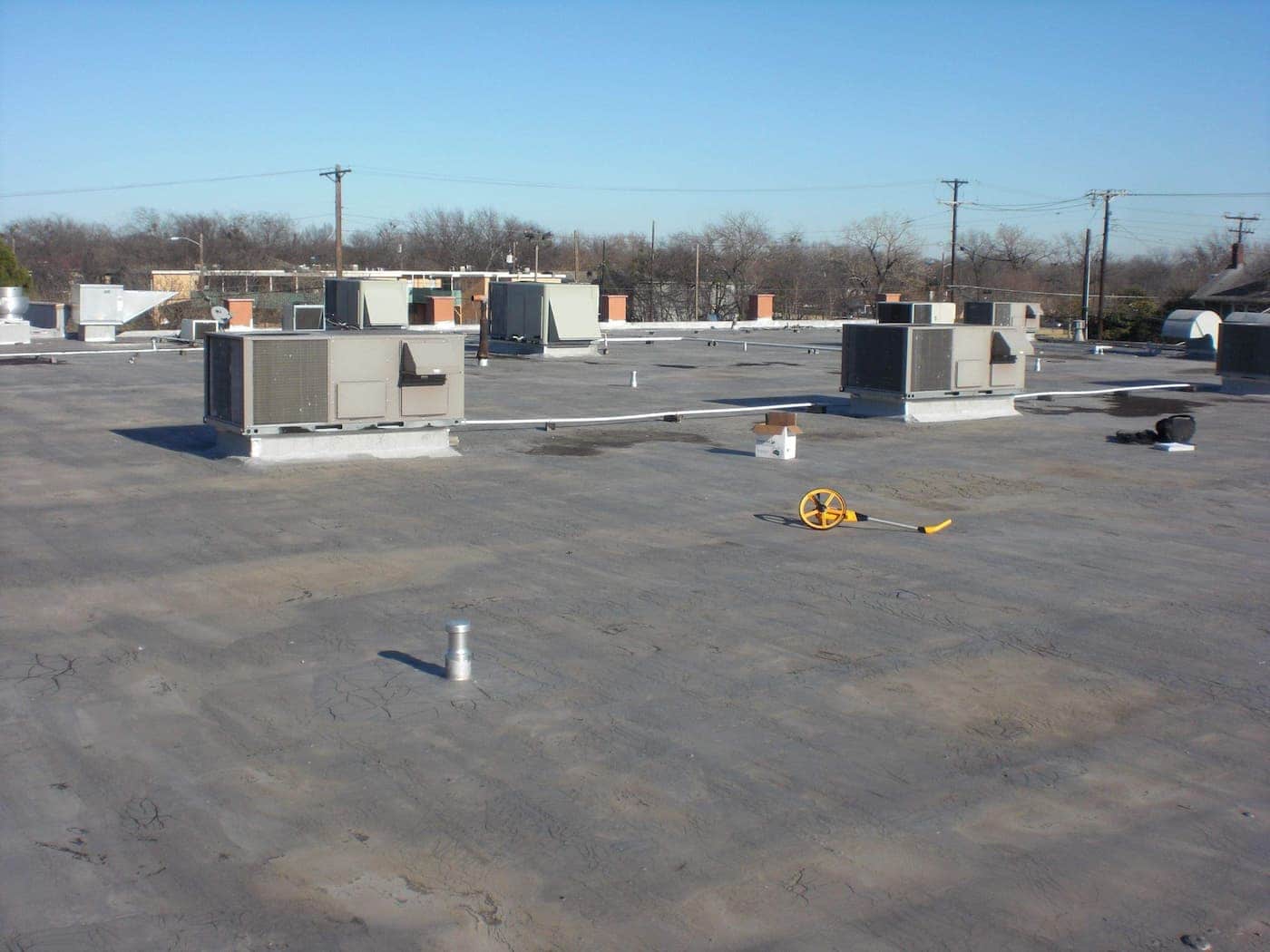
Service for Columbus commercial properties
A post-hail inspection follows a protocol designed to produce findings an insurance adjuster can evaluate. We establish a roof zone diagram for the building before we begin the walk. Every impact point we identify gets photographed with a scale reference, a ruler or reference coin in the frame, and its location recorded on the zone diagram. We photograph hail damage to HVAC equipment, skylights, drain covers, and edge metal on the same diagram.
For modified bitumen surfaces, hail impact displaces granules in a circular pattern around the impact point. We count impact density per 10-square-foot test square at multiple zones across the roof and document the results. For TPO and EPDM membranes, we look for bruising, dimpling, or splits at impact points, particularly over lap seams and penetration flashings where the membrane is in two layers and impact force concentrates differently than in the field.
Service decisions are tied to leak history, roof age, membrane condition, drainage, tenant sensitivity, access, and the capital plan behind the property.
The next step is a repair scope, replacement budget, coating review, maintenance schedule, bid package, moisture survey, or immediate leak response plan.
Questions
As soon as safely accessible, ideally within 72 hours of the event. Early documentation before secondary damage occurs (water intrusion through cracked membrane, granule wash-off from rain after the event) produces the cleanest evidence for an insurance claim. If the building has active interior water intrusion after the storm, contact us immediately for an emergency dry-in assessment.
Ohio insurance policies vary, but most commercial property policies cover hail damage that constitutes functional damage to the roofing system, not just cosmetic impact marks. Functional damage on a flat roof typically includes impact-fractured membrane, cracked base flashings, and damaged HVAC equipment or skylights. Granule displacement on modified bitumen roofs that exposes the underlying mat is typically classified as functional damage by most commercial adjusters. Our report documents the findings to those standards; we do not characterize what the policy covers.
Yes, in the sense that we provide the documented field findings that adjusters review. We are available to walk the roof with an adjuster after we have produced our initial report, to explain the inspection methodology and findings. We do not advocate for a specific claim outcome or represent the policyholder in coverage negotiations, that is the role of the policyholder or their public adjuster.
Share the building address, roof history, current concern, timing, and access constraints. We will give you a practical next step for inspection, repair, maintenance, coating, or replacement planning.
Contact Commercial Roofers of Columbus