How the Columbus property context affects the scope
System selection is checked against deck capacity, insulation needs, rooftop equipment, ponding patterns, wind exposure, repairability, and warranty requirements.

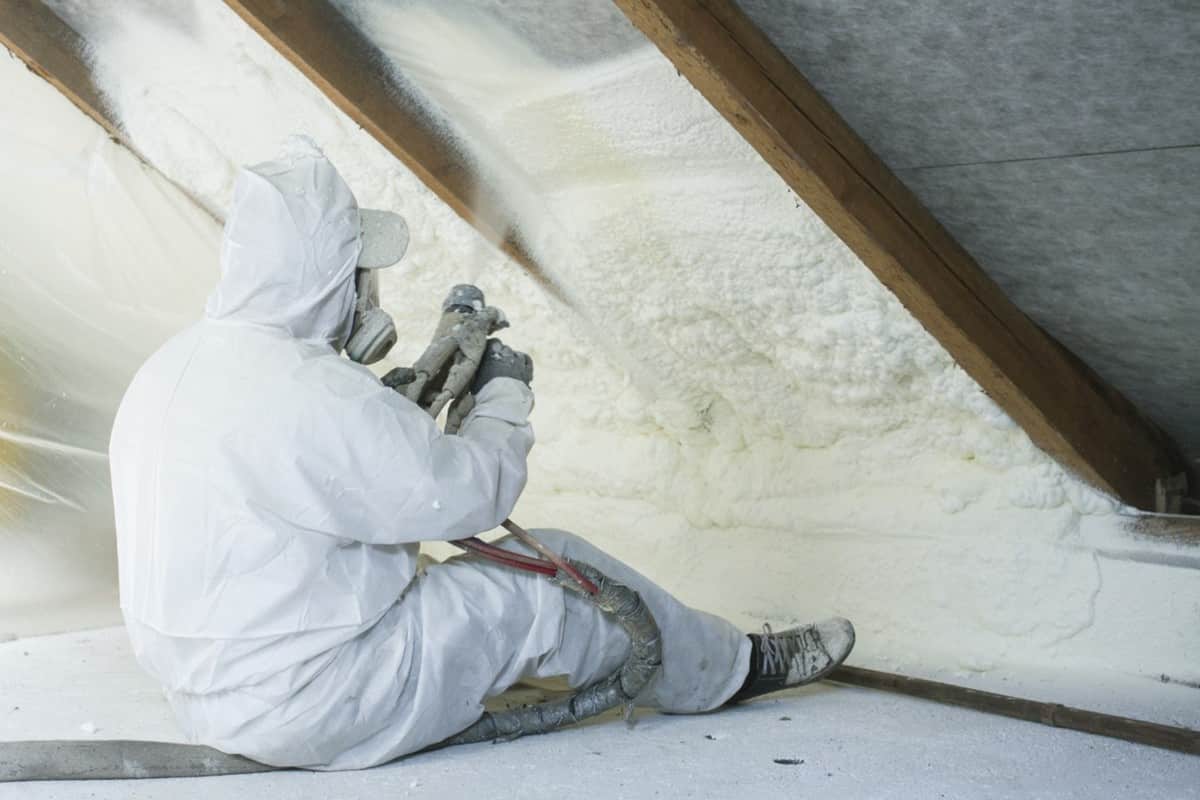
Roof System for Columbus commercial properties
Spray polyurethane foam creates a seamless insulation and waterproofing assembly in a single application, no laps, no fasteners through the membrane plane, no joints in the thermal layer. For Columbus commercial buildings with complex geometry, penetration-dense roof surfaces, or insulation deficiencies, SPF delivers a performance profile that traditional membrane systems cannot match. We install SPF with protective silicone topcoat and enroll projects for manufacturer NDL warranties.
Spray polyurethane foam is a two-component chemical system, polyol and isocyanate, that is mixed at the spray gun and applied as a liquid that expands into a rigid, closed-cell foam. A properly applied SPF assembly at 1.5 to 2 inches of thickness provides R-6 to R-7 per inch, creates a seamless waterproofing layer without the laps and seams that are the primary failure point of membrane roofing systems, and adheres to the substrate without mechanical fasteners through the membrane plane.
System selection is checked against deck capacity, insulation needs, rooftop equipment, ponding patterns, wind exposure, repairability, and warranty requirements.
Owners receive a system-level recommendation that explains what can stay, what should be removed, where risk remains, and how the selected assembly should be maintained.
Questions
Closed-cell SPF has a very low water absorption rate, less than 2 percent by volume even under immersion. In Columbus's freeze-thaw climate, this means the foam layer does not absorb water, does not experience ice crystal formation within the foam cell structure, and does not degrade through freeze-thaw cycling the way open-cell or water-absorptive insulation does. The silicone topcoat, when properly maintained, prevents surface water from reaching the foam. Columbus SPF roofs from the 1990s that have been properly recoated are still performing.
SPF is appropriate for single-story industrial buildings in Columbus when penetration density is high or drainage slope correction is needed. For simple, large-footprint warehouses with adequate drainage and few penetrations, mechanically attached TPO is usually the more cost-effective solution. For buildings with forklift docks, heavy equipment access to the roof, or frequent physical damage risk to the membrane surface, SPF's monolithic construction is more damage-resistant than TPO at equivalent thickness but the silicone topcoat requires more careful treatment than a TPO membrane under tool traffic.
SPF roofing's high R-value per inch can contribute significantly to meeting the continuous insulation requirements of the Ohio Building Code's 2021 IBC cycle. For Columbus commercial buildings where the existing insulation is below current code R-values, an SPF installation that brings the assembly to R-25 or above may qualify under federal commercial building energy efficiency provisions. We provide the R-value documentation needed for the building owner's energy code compliance and tax credit evaluation.
Share the building address, roof history, current concern, timing, and access constraints. We will give you a practical next step for inspection, repair, maintenance, coating, or replacement planning.
Contact Commercial Roofers of Columbus