How the Columbus property context affects the scope
The building type affects staging, work hours, tenant protection, rooftop equipment coordination, drainage review, access routes, and closeout documentation.

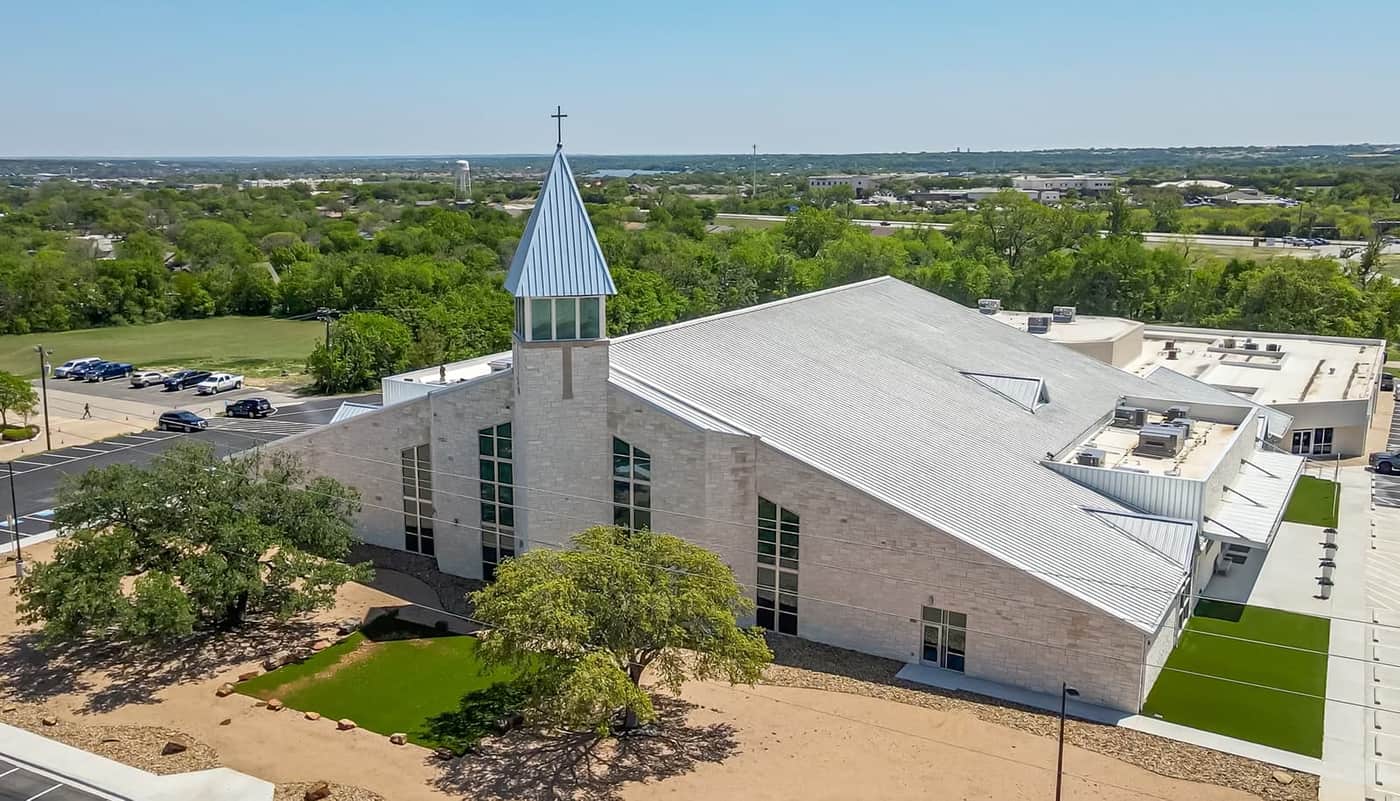
Property Type for Columbus commercial properties
Columbus has a wide range of religious buildings, historic brick churches in German Village and Downtown that date to the 1870s, and modern megachurch campuses like Discover Church and Vineyard Columbus that seat thousands. The roofing challenges at both ends of that spectrum are different, and I work in both environments.
Columbus's religious building inventory spans more than 150 years of construction. The historic congregations in German Village, St. Mary Catholic Church on Fifth Street, the Schiller Park area churches, and the 19th-century brick churches along Parsons Avenue, have slate, tile, and aged asphalt roofing systems on buildings that carry historic significance and in some cases historic preservation review requirements. Repairing or replacing these roofs requires understanding how to work with aging masonry construction, how to source appropriate replacement materials, and how to navigate German Village Commission design review where exterior modifications are involved.
The building type affects staging, work hours, tenant protection, rooftop equipment coordination, drainage review, access routes, and closeout documentation.
The result is a property-specific roof plan that protects the building use while giving ownership a clear scope, schedule, access plan, and budget path.
Questions
Flat roof replacement behind masonry parapets typically does not require German Village Commission review because the work is not visible from the street, it does not change the building's exterior appearance. Work that is visible from the street, parapet cap repairs, façade flashings, steeple work, may require Certificate of Appropriateness review depending on the scope. I identify which elements of the proposed scope are visible and require review and which are not, before the scope is finalized.
Yes. We provide phased scope documents that identify the highest-priority roof sections, the ones with active leaks, confirmed wet insulation, or structural risk, as Phase 1, with lower-priority sections in subsequent phases. The phased scope gives the building committee a defensible document for the capital campaign and a clear path for completing the work as funds are raised. Each phase is designed to leave the building watertight at the end of the phase.
All exterior work and equipment access is scheduled for weekdays. No staging, material delivery, or roofing operations are planned for the primary parking access routes or building entries from Friday evening through Sunday afternoon. If the project has a tight production schedule that requires weekend work, I work with the facilities director to identify which areas of the campus are outside the service access zones and can accommodate weekend production without affecting worship operations.
Share the building address, roof history, current concern, timing, and access constraints. We will give you a practical next step for inspection, repair, maintenance, coating, or replacement planning.
Contact Commercial Roofers of Columbus